The 8 Best Applicant Tracking Systems for Small Businesses in 2026
We compared 15 applicant tracking systems for small and growing teams on price, setup, features, and reviews. Here are the 8 best, with prices checked November 2026.
Once you have more than a couple of roles open, hiring in a shared inbox stops working. Resumes get lost, hiring managers forget to leave feedback, and good candidates take other offers while you’re still scheduling.
An applicant tracking system (ATS) fixes that by putting every job, applicant, interview, and offer in one place. The hard part is choosing one: prices range from free to thousands of dollars a year, and many tools are built for large recruiting teams rather than a company of 30 where the founder still interviews everyone. We compared 15 tools on price, setup effort, features, and reviews to find the 8 best for small and growing businesses.
What to look for in an applicant tracking system
Most small companies need the same five things from an ATS, in roughly this order:
- A price that stays predictable. Tools charge per recruiter, per user, per employee, or a flat fee. Work out what you’d pay at your size today and in two years.
- Quick setup without a sales call. A free plan or a self-serve trial lets you post a real job before you commit.
- The core hiring workflow. Posting to job boards, a visual pipeline, interview scorecards, scheduling, and offer letters.
- Room for hiring managers. In small companies, managers do most of the interviewing. Per-seat pricing can get expensive if every manager needs a login.
- Proof that it works for teams like yours. Reviews from companies of a similar size matter more than a long feature list.
How we compared these tools
We started with 15 applicant tracking systems that appear most often in buyer guides and review sites, then narrowed them to the 8 below. The full list, and why each tool did or didn’t make it, is at the end of this article.
Each tool was scored from 1 to 5 on five criteria, weighted as follows:
| Criterion | Weight | What we looked at |
|---|---|---|
| Price and value | 25% | Entry price, how price grows with your team, what the entry plan includes |
| Ease of getting started | 20% | Free plan or trial without a credit card, or a sales demo first |
| Core hiring features | 25% | Job posting, pipeline, scorecards, scheduling, offers, sourcing, reporting |
| Fit for small teams | 15% | Access for hiring managers, plan limits for companies of 5 to 500 people |
| User reviews | 15% | G2 rating and number of reviews |
All prices and plan details come from each vendor’s own pricing page, captured on November 5, 2026. The screenshots in this article show each tool’s homepage on the same day. Ratings are from G2 on the same date. For Manatal, we also walked through its public product tour. Prices change often, so check the vendor’s site before you buy. You can read more about how we research and compare software.
Comparison table
| # | Tool | Best for | Starting price (Nov 2026) | Free option | G2 rating | Score |
|---|---|---|---|---|---|---|
| 1 | Zoho Recruit | Free plan | US$0; paid from US$25 per recruiter/month (annual) | Free plan, 15-day trial | 4.4 (1,869 reviews) | 4.5/5 |
| 2 | Breezy HR | Many hiring managers | $157/month (annual) | 14-day trial | 4.4 (697 reviews) | 4.4/5 |
| 3 | Manatal | Low cost per seat | $15 per user/month (annual) | 14-day trial | 4.8 (147 reviews) | 4.3/5 |
| 4 | Workable | Growing companies | $299/month (annual, 1 to 20 employees) | 15-day trial | 4.4 (710 reviews) | 4.2/5 |
| 5 | JazzHR | Budget annual plan | $1,000/year | n/a | 4.4 (878 reviews) | 4.0/5 |
| 6 | BambooHR | ATS plus HRIS | $10 per employee/month | Free trial offered | 4.4 (8,332 reviews) | 3.9/5 |
| 7 | Ashby | Data-driven teams | $400/month (11 to 25 employees, monthly) | n/a | 4.7 (250 reviews) | 3.8/5 |
| 8 | Greenhouse | Structured hiring at scale | Custom quote | n/a | 4.4 (4,064 reviews) | 3.4/5 |
Scores are rounded to one decimal place. BambooHR’s rating covers its whole HR platform, not just hiring.
The 8 best applicant tracking systems
1. Zoho Recruit: best free plan
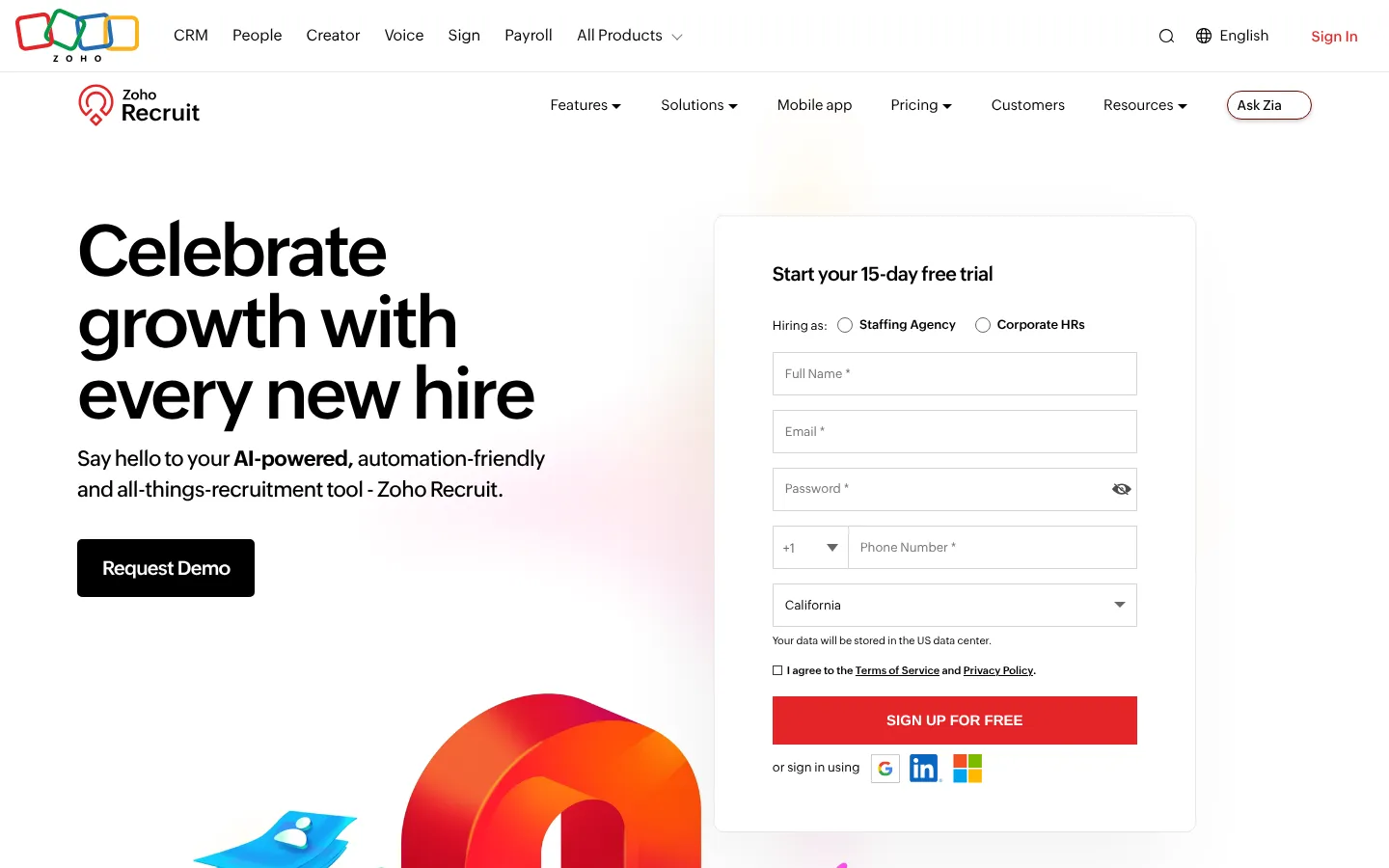
Zoho Recruit’s homepage, captured November 5, 2026.
- Best for: small teams that want to start free and pay per recruiter later
- Score: 4.5/5
- Pricing (as of November 2026): Free plan at US$0 with 1 active job per recruiter license. Standard costs US$25 and Enterprise US$50 per recruiter per month, billed annually, with 10 and 20 active jobs per license.
- G2 rating: 4.4 out of 5 (1,869 reviews)
What it is: Zoho Recruit is the hiring app in Zoho’s large suite of business software. It covers the full pipeline from job posting to offer, and its pricing is set per recruiter rather than per employee, so a small team with one or two people running hiring pays very little.
What users say: A founder’s-office reviewer at a small business praised its “seamless integration with the broader Zoho ecosystem” on G2. Another small-business reviewer said setup was slow, “particularly with verification and integrating Microsoft 365, which took about two weeks.”
Key features:
- Forever Free plan with candidate management, email management, and interview scheduling
- Candidate sourcing on the Standard plan
- AI-powered automation on the Enterprise plan
- 15-day free trial and a 45-day money-back guarantee on paid plans
Pros:
- The only tool here with a permanent free plan
- Low per-recruiter price on paid plans
- Works well if you already use other Zoho apps
Cons:
- The free plan allows just 1 active job per recruiter license
- Job limits per license on paid plans (10 on Standard, 20 on Enterprise)
- Setup can take longer than simpler tools, especially when connecting email outside Zoho
Bottom line: Zoho Recruit is the cheapest way to get a real ATS, and the free plan is enough for many companies hiring a handful of people a year.
2. Breezy HR: best for teams with lots of hiring managers
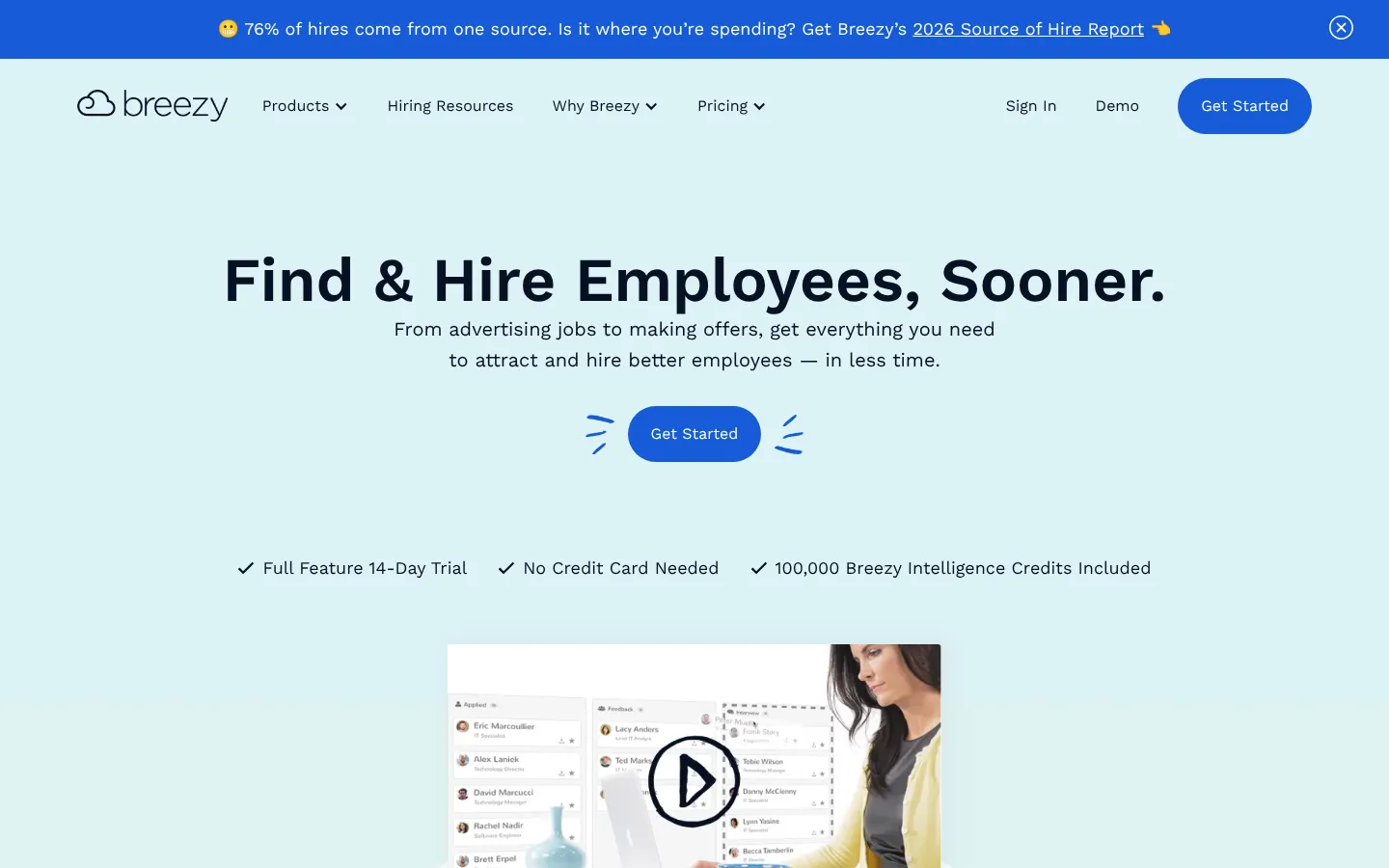
Breezy HR’s homepage, captured November 5, 2026.
- Best for: companies where many managers take part in hiring
- Score: 4.4/5
- Pricing (as of November 2026): Startup $157, Growth $273, and Business $439 per month billed annually ($189, $329, and $529 billed monthly). Custom Pro by quote.
- G2 rating: 4.4 out of 5 (697 reviews)
What it is: Breezy HR is an ATS that pitches itself at teams of 10 to 10,000 people. Its big difference is pricing: every plan includes unlimited users and unlimited open positions, so the price doesn’t rise as more managers join the hiring process.
What users say: A mid-market reviewer on G2 liked being able to “tag the hiring managers for easy conversation, keeping everything tracked to the applicant.” Another reviewer, at a large company, said “the site still has quite a few bugs, which makes it frustrating to use.”
Key features:
- Unlimited users and open positions on every plan
- Customizable hiring pipeline and a custom domain for your careers portal
- Scorecards, interview guides, employee referrals, reference checks, and e-signatures on Growth
- Offer management and approvals on Business
Pros:
- Flat pricing that doesn’t penalize you for adding hiring managers
- 14-day trial with no credit card
- Clear plan structure published on the pricing page
Cons:
- No free plan
- Scorecards and interview guides start on the $273 Growth plan, not Startup
- Some reviewers report bugs
Bottom line: If five or more people in your company help with hiring, Breezy HR’s flat price usually beats per-seat tools.
3. Manatal: best low-cost per-seat option
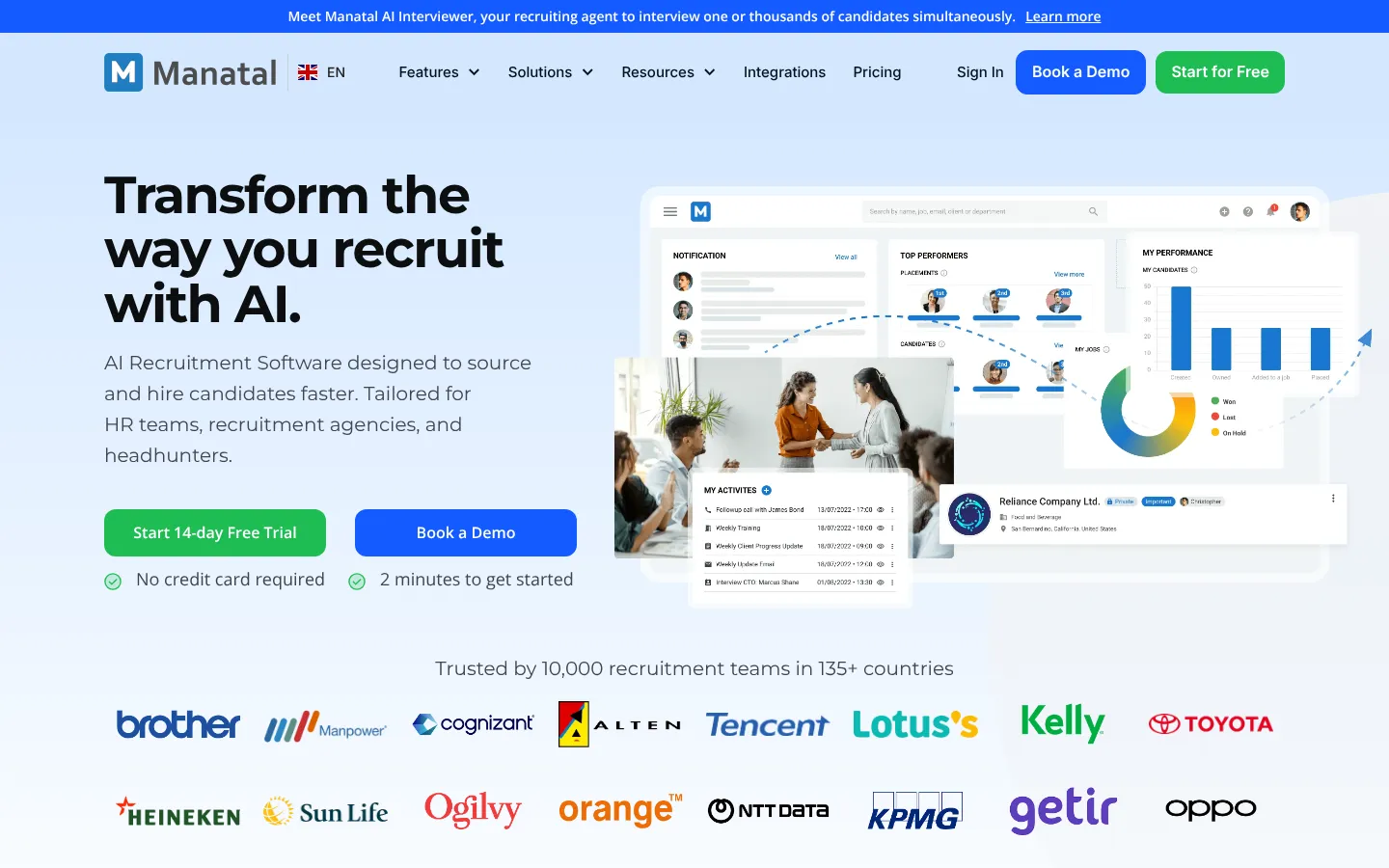
Manatal’s homepage, captured November 5, 2026.
- Best for: small teams with one or two recruiters who want AI matching on a budget
- Score: 4.3/5
- Pricing (as of November 2026): Professional $15, Enterprise $35, and Enterprise Plus $55 per user per month on yearly plans. Professional allows up to 15 jobs and 10,000 candidates, with unlimited hiring managers.
- G2 rating: 4.8 out of 5 (147 reviews)
What it is: Manatal is a recruitment platform used by in-house HR teams and recruitment agencies. It uses AI to summarize candidates and recommend them for open jobs, and it includes a no-code careers page builder.
What we saw: In Manatal’s public product tour, the home dashboard shows charts of your candidates and jobs by status (active, completed, cancelled, on hold), with a side menu for jobs, candidates, departments, and a career page. The tour also shows a sample branded career page where applicants can search jobs by keyword, location, and organization, and a portal where candidates track their applications. The menu includes agency features such as vendors and placements, which in-house teams won’t need.
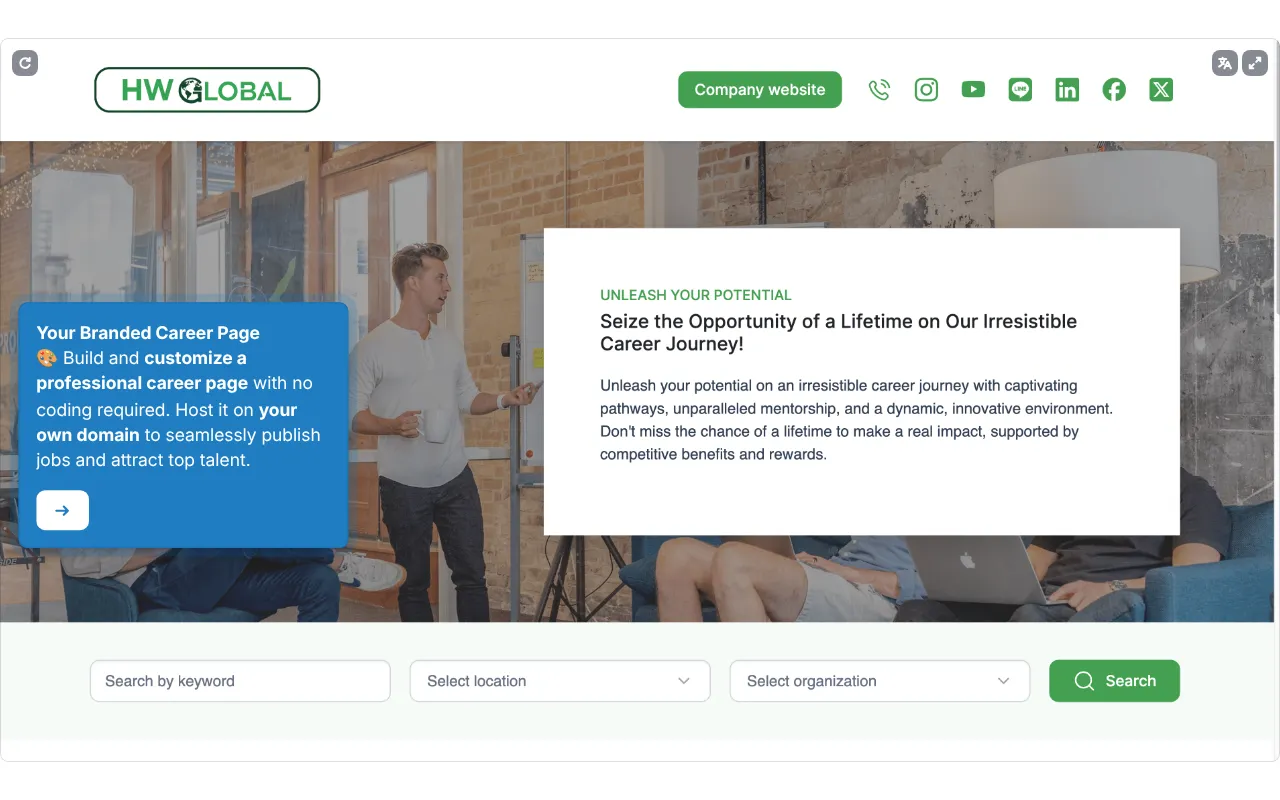
The sample career page in Manatal’s public product tour, captured November 5, 2026.
What users say: A small-business recruitment consultant on G2 said it “is very easy to use and fits perfectly into our daily recruitment workflow.” A mid-market reviewer said it “has failed to provide us reporting when it comes to recruiter performance.”
Key features:
- AI candidate summaries and job recommendations
- No-code branded career page that you can host on your own domain
- Candidate and employee portal for applications and internal moves
- Workflow automation from the Enterprise plan
Pros:
- The lowest per-user price in this list
- Unlimited hiring managers on every plan
- 14-day trial with no credit card
Cons:
- The $15 plan is capped at 15 jobs
- Built for agencies as much as in-house teams, so some menus won’t apply to you
- Fewer G2 reviews than the bigger names, and one reviewer flags weak recruiter reporting
Bottom line: Manatal gives a one-recruiter team AI matching and a polished careers page for less than most tools charge for basic tracking.
4. Workable: best all-round ATS for growing companies
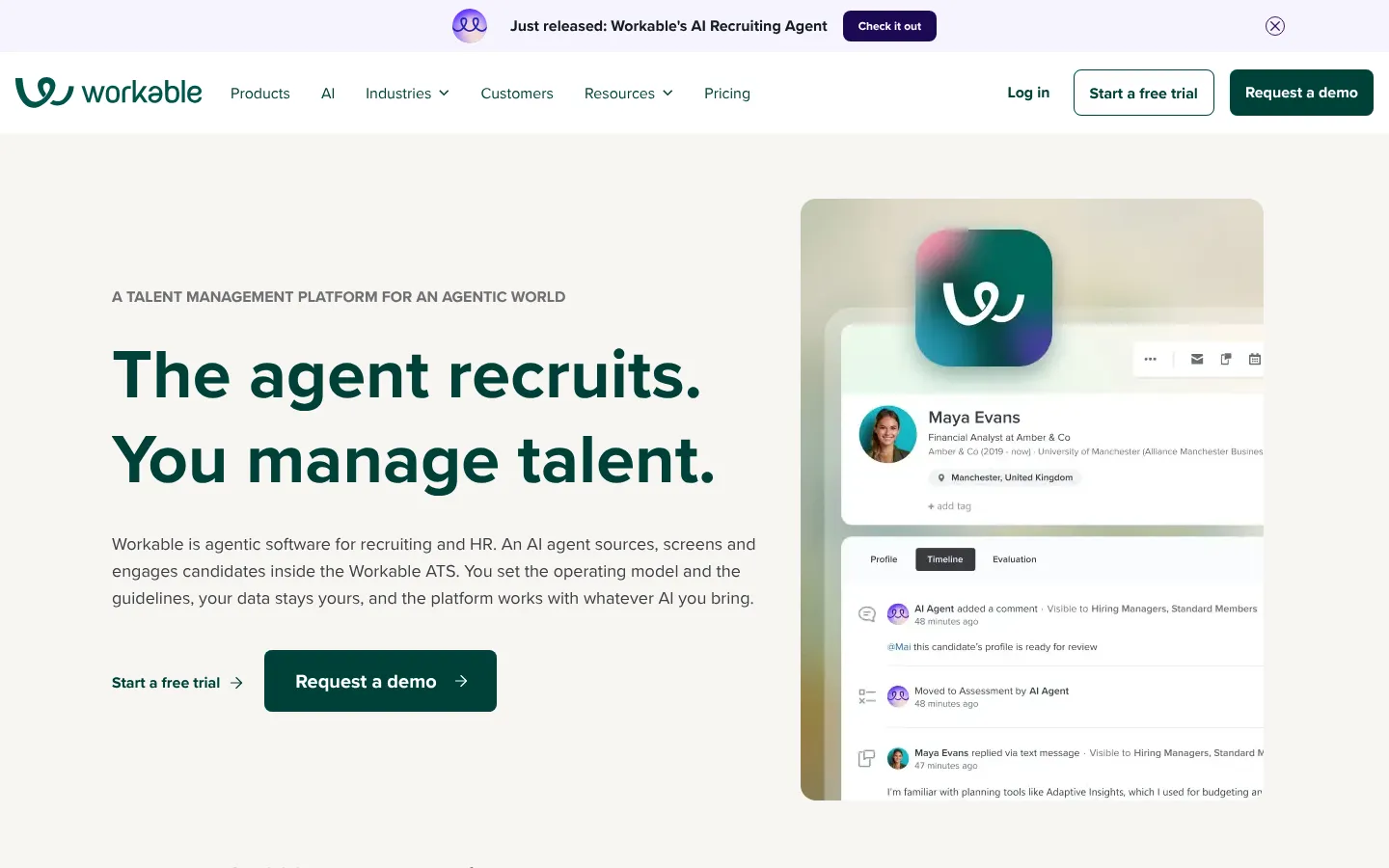
Workable’s homepage, captured November 5, 2026.
- Best for: companies hiring steadily that want sourcing and AI tools built in
- Score: 4.2/5
- Pricing (as of November 2026): Standard $299 per month billed annually ($3,588 a year) for companies with 1 to 20 employees. Premier is $599 and Enterprise $719 per month at the same size. Prices rise with company size.
- G2 rating: 4.4 out of 5 (710 reviews)
What it is: Workable is an ATS with pricing bands that start at companies of 1 to 20 employees. It combines job posting, a candidate sourcing suite, and AI recruiting agents, and you can bundle it with Workable’s HR software for a discount.
What users say: An enterprise talent acquisition specialist on G2 said “self-rescheduling for interviews improves the candidate experience.” A mid-market HR reviewer said “the customised dashboards are limited and the options don’t often go far enough to hiring KPIs.”
Key features:
- Candidate sourcing suite and unlimited active jobs (subject to fair usage)
- 3,000 AI credits included with each ATS plan for its sourcing, screening, and engagement agents
- Hiring plans, custom report builder, and 9 languages
- Add-ons for texting ($89/month), video interviews ($109/month), and assessments ($59/month)
Pros:
- The most complete feature set of the self-serve tools here
- 15-day trial with no credit card
- Optional HR module if you want recruiting and HR in one system
Cons:
- The highest entry price of the tools with published prices
- Price is tied to company size, so it rises as you grow
- Texting, video interviews, and assessments cost extra
Bottom line: Workable is the safe all-round pick once hiring is a regular part of your month, as long as the $299 starting price fits your budget.
5. JazzHR: best budget annual plan
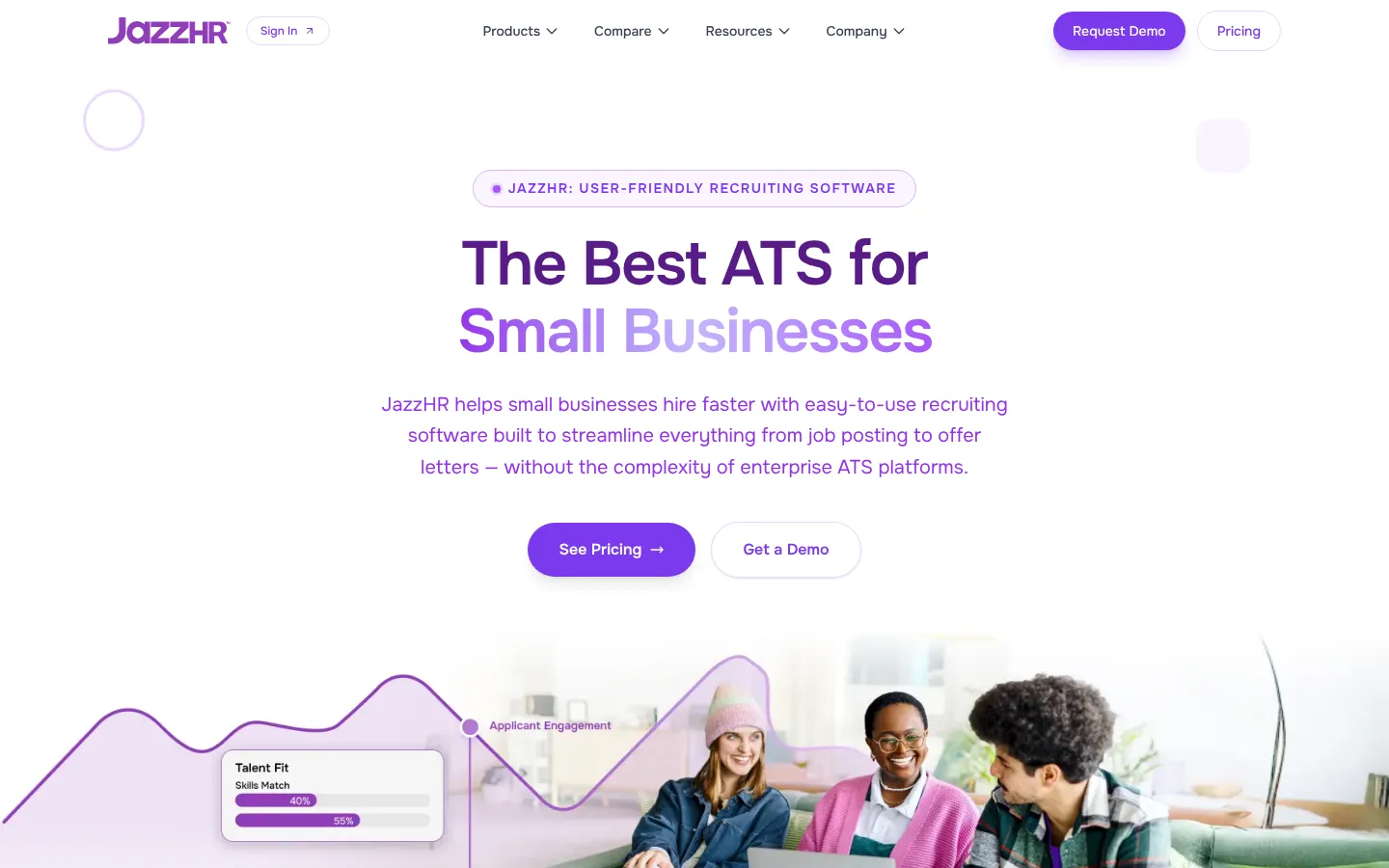
JazzHR’s homepage, captured November 5, 2026.
- Best for: small businesses that hire occasionally and want a low yearly bill
- Score: 4.0/5
- Pricing (as of November 2026): Hero $1,000, Plus $3,480, and Pro $5,508 per year, billed annually. Paying yearly saves up to 24% compared with monthly billing.
- G2 rating: 4.4 out of 5 (878 reviews)
What it is: JazzHR is a straightforward ATS for small businesses. It focuses on getting jobs in front of applicants, with posting to more than a dozen free job boards, and keeping inbound candidates organized.
What users say: A small-business owner on G2 wrote that “the quality of candidates JazzHR helps us find is far better than what we experienced with other platforms.” A mid-market reviewer noted “it’s mainly built to organize inbound applicants and lacks native passive candidate sourcing tools.”
Key features:
- Posting to over a dozen free job boards, plus paid premium listings
- LinkedIn Recruiter integration and email templates on every plan
- AI candidate matching, structured interviews, and task automation on Plus
- Offers, e-signatures, and custom reports on Pro
Pros:
- About $83 a month on the entry plan when paid yearly
- Room to grow: the Plus plan supports up to 200 active jobs
- Strong job board reach for inbound applicants
Cons:
- The Hero plan starts at 3 job postings a month
- Little help with sourcing passive candidates
- Structured interviews and AI matching need the $3,480 Plus plan
Bottom line: JazzHR is a sensible low-cost choice if you mainly post jobs and sort the applicants who come in.
6. BambooHR: best if you also need an HRIS
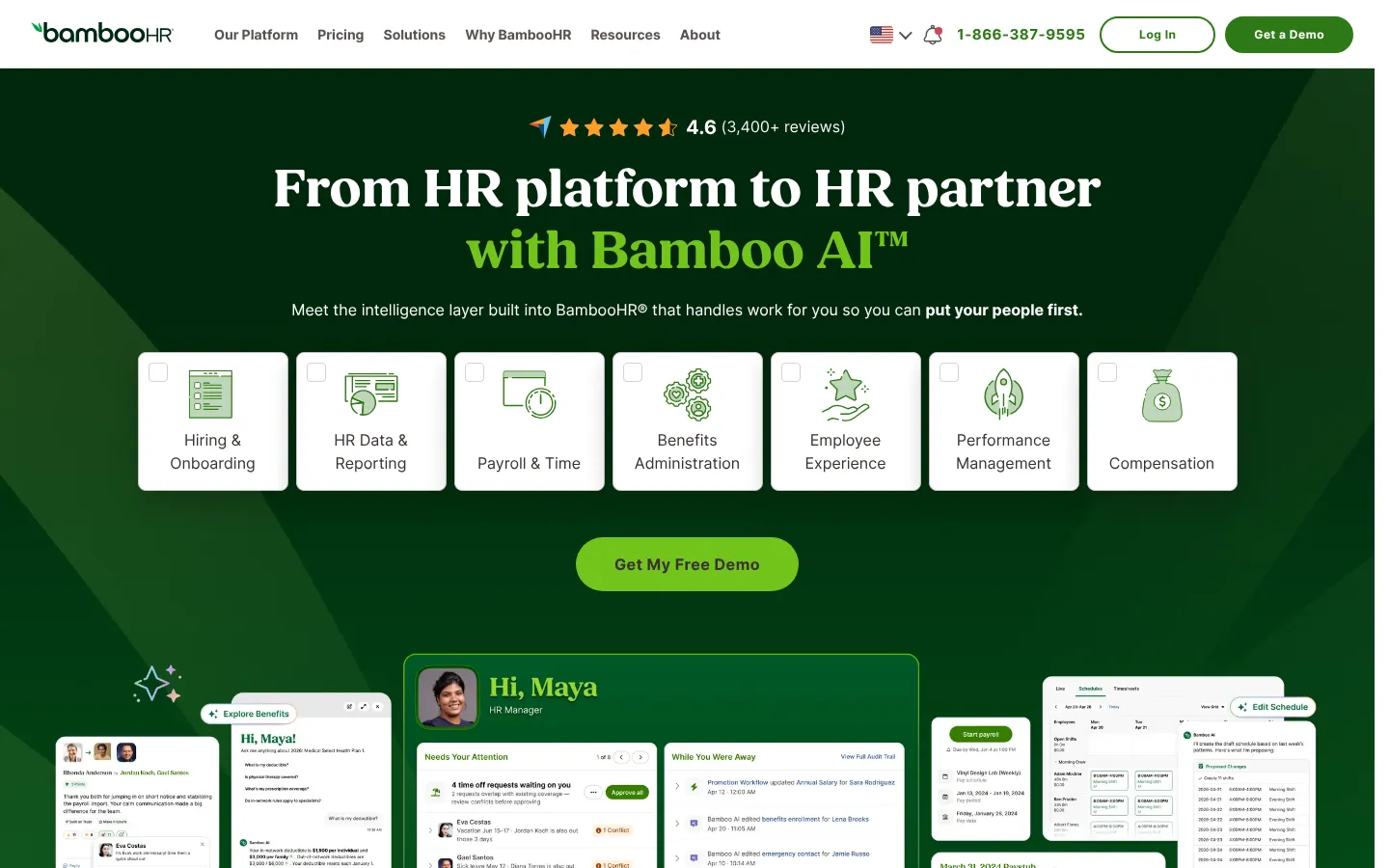
BambooHR’s homepage, captured November 5, 2026.
- Best for: small companies that want hiring, onboarding, and employee records in one system
- Score: 3.9/5
- Pricing (as of November 2026): Core $10, Pro $17, and Elite $25 per employee per month. Hiring and onboarding are included in Core. BambooHR gives exact prices by quote, with volume and non-profit discounts.
- G2 rating: 4.4 out of 5 (8,332 reviews, for the whole HR platform)
What it is: BambooHR is an HR information system (HRIS) built for small and mid-sized businesses. Applicant tracking is one part of it, so new hires move straight from candidate to employee record without retyping anything.
What users say: A senior recruitment lead at a mid-market company praised BambooHR’s “candidate sourcing feature, which we use whenever we have an open position” on G2, but added that “the candidate search filter in BambooHR could be more accurate.”
Key features:
- Hiring and onboarding included in the Core plan
- Employee records, time off, and benefits tracking in the same system
- Performance management on Pro, compensation tools on Elite
- Payroll available as an add-on
Pros:
- One system for hiring and everything after the hire
- Price scales with headcount, which suits small companies
- Used by more than 30,000 companies, according to BambooHR
Cons:
- The hiring tools are lighter than a dedicated ATS
- You pay for the whole HR platform even if you only need hiring
- Exact pricing requires a quote
Bottom line: Choose BambooHR when you need an HR system anyway and want hiring included, not when hiring is your main problem.
7. Ashby: best for data-driven, fast-growing teams
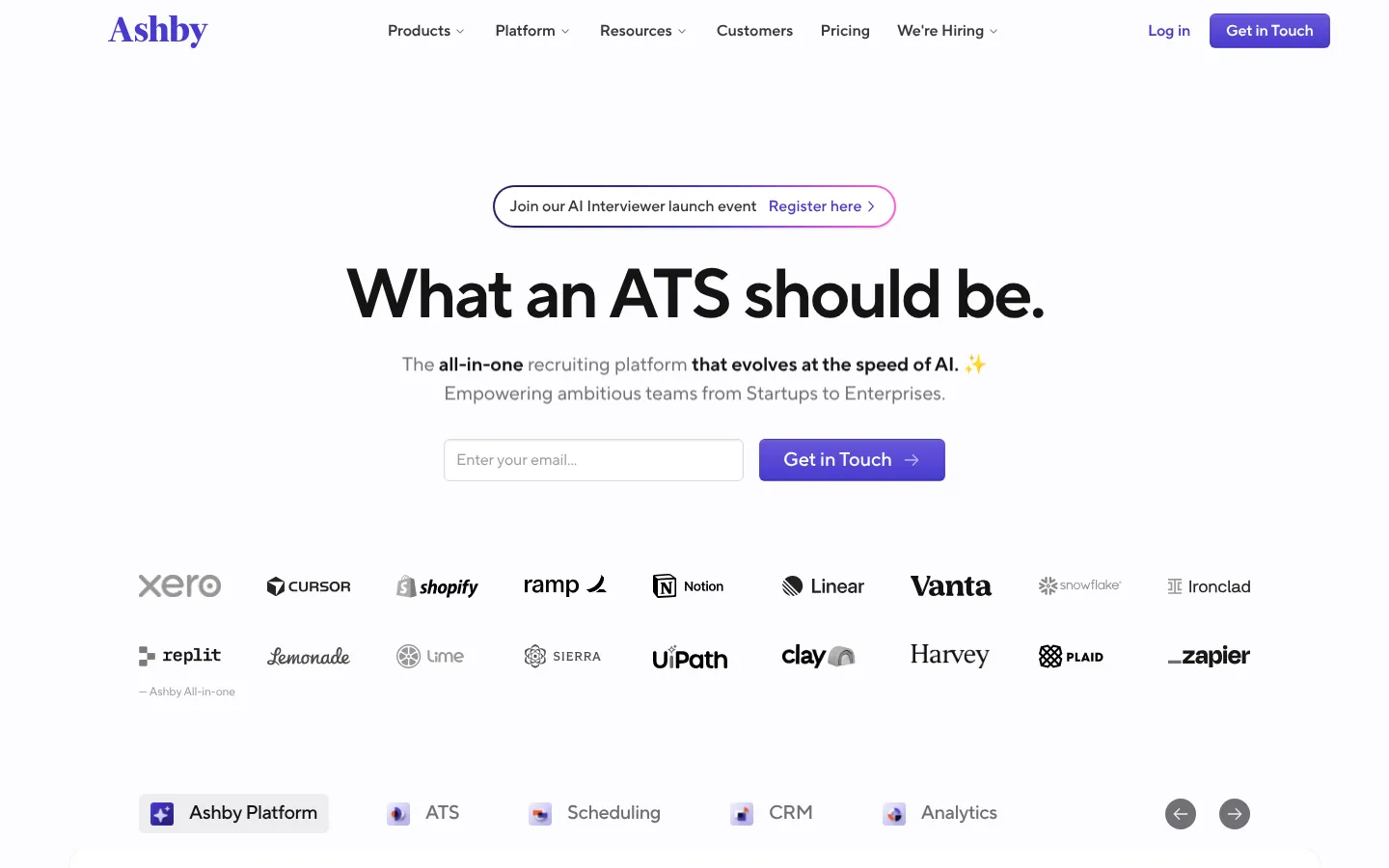
Ashby’s homepage, captured November 5, 2026.
- Best for: startups scaling quickly with a dedicated recruiter or two
- Score: 3.8/5
- Pricing (as of November 2026): The Foundations plan (up to 100 employees) showed $400 per month for a company of 11 to 25 employees on monthly billing, with 10% off annual commitments. Plus and Enterprise plans are quote only.
- G2 rating: 4.7 out of 5 (250 reviews)
What it is: Ashby is an all-in-one recruiting platform that combines an ATS, candidate outreach, interview scheduling, and detailed analytics. It’s popular with startups that plan to hire many people over the next year or two.
What users say: A senior recruiting coordinator on G2 said it is “very user friendly and was easy for me to learn, and is easy for me to teach.” A small-business founder noted that “on seat-based plans, though, I’ve found it can be harder to predict costs as more people need access.”
Key features:
- Job posting to LinkedIn, Indeed, and Google Jobs, plus a hosted job board
- Outreach sequences for sourcing candidates
- Structured interview plans and visual interview scheduling
- Two-way text messaging with candidates in the US and Canada
Pros:
- Highest G2 rating among tools with 200+ reviews in this list
- Strong reporting and analytics
- Built to grow from startup to large company
Cons:
- Pricing beyond the smallest plan requires talking to sales
- No self-serve free trial on the pricing page
- Costs can be harder to predict as more people need access
Bottom line: Ashby is worth a demo if you expect to hire dozens of people soon and want to measure every step of the process.
8. Greenhouse: best for structured hiring at scale
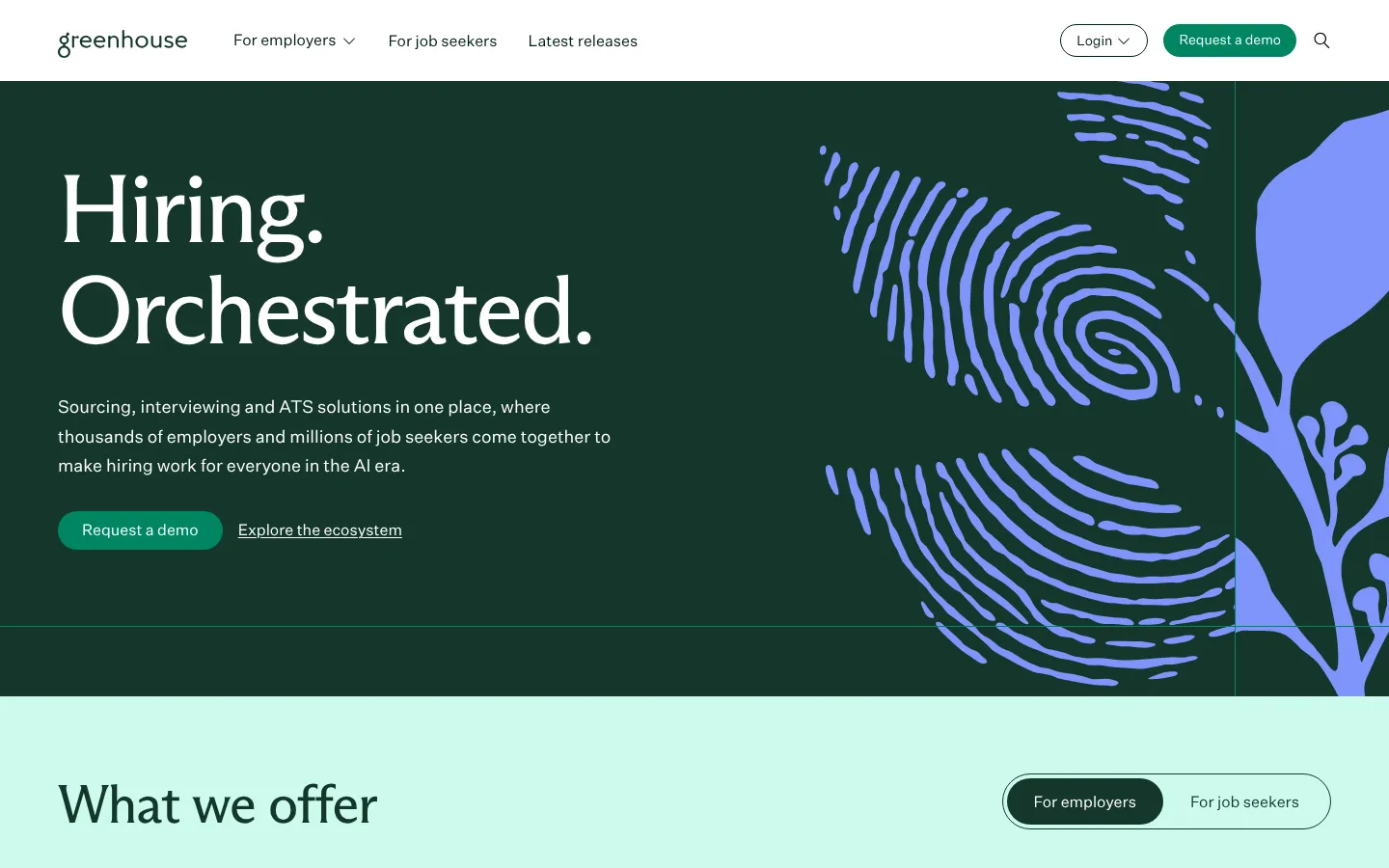
Greenhouse’s homepage, captured November 5, 2026.
- Best for: mid-sized companies with complex, multi-team hiring
- Score: 3.4/5
- Pricing (as of November 2026): Core, Plus, and Pro plans, all priced by custom quote after a demo.
- G2 rating: 4.4 out of 5 (4,064 reviews)
What it is: Greenhouse builds its product around structured hiring: interview kits, scorecards, and consistent questions for every role, so decisions are easier to compare. Its plans are pitched at companies whose hiring has grown more complex, such as adding teams, locations, or brands.
What users say: A mid-market reviewer on G2 described it as allowing “seamless communication with candidates, amongst internal team members.”
Key features:
- Structured interview kits and scorecards from the Core plan
- Automation, advanced configuration, and deeper reporting on Plus
- Governance, security, and developer tools on Pro
Pros:
- The strongest structured-hiring tools in this list
- Scales to multiple teams, locations, and brands
- One of the most-reviewed ATS platforms on G2, with 4,064 reviews
Cons:
- No published prices; every plan needs a demo and quote
- Likely more process than most companies under 50 people need
- No self-serve trial
Bottom line: Greenhouse is the right step up when hiring involves many teams and you need consistency, but it’s more than most small businesses need on day one.
Which applicant tracking system should you choose?
If you fill fewer than about five roles a year, you may not need to pay for an ATS at all. A shared inbox and spreadsheet, or Zoho Recruit’s free plan, can be enough until several roles are open at once or more than one person is reviewing candidates.
Every tool we considered
| Tool | Made the top 8? | Why or why not |
|---|---|---|
| Zoho Recruit | Yes (#1) | Free plan and low per-recruiter pricing |
| Breezy HR | Yes (#2) | Unlimited users at a flat price |
| Manatal | Yes (#3) | Lowest per-user price, AI matching |
| Workable | Yes (#4) | Most complete self-serve feature set |
| JazzHR | Yes (#5) | Low yearly price for occasional hiring |
| BambooHR | Yes (#6) | Hiring built into an HRIS |
| Ashby | Yes (#7) | Analytics for fast-growing teams |
| Greenhouse | Yes (#8) | Structured hiring at scale |
| Pinpoint | No | Its pricing page wasn’t available at the address we checked, so we couldn’t confirm prices |
| Lever | No | Pricing by quote only, through a form on its pricing page |
| Teamtailor | No | Pricing by quote only |
| Recruitee (Tellent) | No | Plans listed without prices on its pricing page |
| iCIMS | No | Aimed at large enterprises |
| SmartRecruiters | No | Aimed at large enterprises |
| Workday Recruiting | No | Built for companies already using Workday’s enterprise HR software |
Frequently asked questions
What is the best applicant tracking system for a small business?
In our comparison, Zoho Recruit scored highest for small businesses because it has a free plan and paid plans from US$25 per recruiter per month. Breezy HR is the better pick if many hiring managers need access, since every plan includes unlimited users. Workable suits companies that are growing fast and want sourcing and AI tools built in.
Is there a free applicant tracking system?
Yes. Zoho Recruit has a Forever Free plan that covers candidate management, email, and interview scheduling, limited to one active job per recruiter license. Most other tools offer a free trial instead: 15 days for Workable and Zoho Recruit, and 14 days for Breezy HR and Manatal. Workable, Breezy HR, and Manatal say no credit card is needed.
How much does an applicant tracking system cost?
Entry prices we found in November 2026 range from free (Zoho Recruit) to about $83 a month (JazzHR’s $1,000 yearly plan), $157 a month (Breezy HR, billed annually), and $299 a month (Workable, for companies with up to 20 employees). Some tools charge per recruiter or user, some per employee, and Greenhouse only quotes after a demo.
Do I need an ATS if I only hire a few people a year?
Not always. If you fill fewer than about five roles a year, a shared inbox and spreadsheet, or a free plan like Zoho Recruit’s, is often enough. Paid software starts to pay off when several roles are open at once, more than one person reviews candidates, or applicants get lost in email.
What is the difference between an ATS and an HRIS?
An applicant tracking system manages hiring: job posts, applicants, interviews, and offers. An HRIS manages people after they join: employee records, time off, and often payroll and benefits. Some tools, such as BambooHR, include basic applicant tracking inside an HRIS, while Workable sells recruiting and HR as separate parts you can bundle.